

Chinese Skullcap (Scutellaria baicalensis): Baicalin, Antioxidant Research and Safety
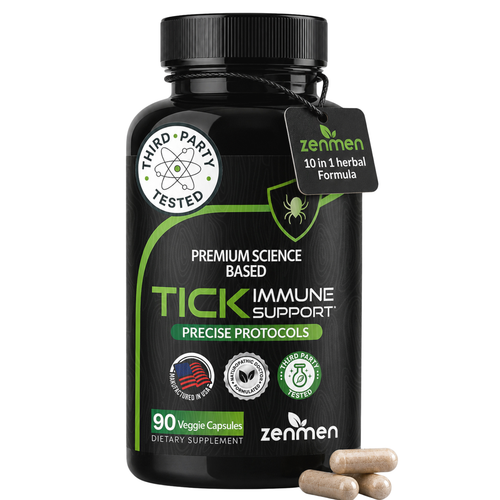
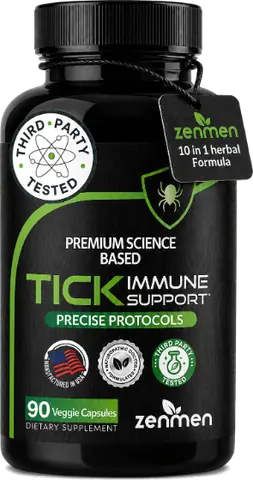
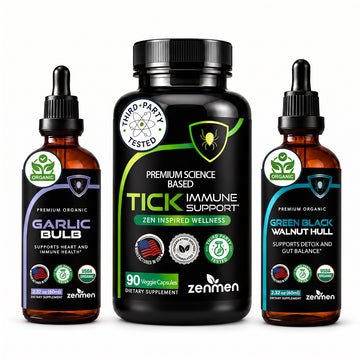
Quick answer: Chinese skullcap (Scutellaria baicalensis), called Huang Qin or "yellow herb" in traditional Chinese practice, is a mint-family plant whose golden root is rich in the flavonoids baicalin and baicalein. A 2021 review describes antioxidant, inflammation-balancing, antiallergic and immune-modulating activity for these compounds, mostly from lab and animal studies. Its clinical safety is well documented, and baicalein can have a mild calming effect. Zenmen uses Chinese skullcap in Tick Immune Support capsules (200 mg, 50% baicalin) and Tick Immune Support Tincture (200 mg root, dry herb equivalent).*
Key takeaways
- The dried root is the medicinal part; baicalin is the sugar-bound form of baicalein. [1]
- Reported antioxidant activity includes free-radical scavenging and activation of the Nrf2 pathway. [1]
- Very high intakes in animal studies may suppress immunity, so sensible amounts matter. [1]
- Baicalein can act on GABA receptors, so mild drowsiness is possible. [2]
- Choose identity-tested root extracts; look-alike plants have been linked to liver injury.
What Is Chinese Skullcap?
Chinese skullcap is a perennial herb native to China, Korea, Mongolia and Siberia, with purple-blue, helmet-shaped flowers that give the Scutellaria genus its name. The medicinal part is the dried root, bright yellow inside. [1] It has been part of Chinese herbal tradition for around two thousand years as a cooling, bitter herb. It is not the same plant as American skullcap (Scutellaria lateriflora), whose leaves are used mainly as a calming herb.
Key Compounds
- Baicalin, the most abundant flavonoid and the marker used to standardize extracts.
- Baicalein, the sugar-free form, often more active in lab tests.
- Wogonin and wogonoside, related flavonoids. [1]
What the Research Shows
A 2021 review in Animals by Yin and colleagues describes baicalin and baicalein as antioxidant (free-radical scavenging and Nrf2 activation), anti-inflammatory and antiallergic, and immune-modulating. Most of this evidence comes from lab and animal work, and very high intake in poultry may suppress immunity, a reminder that sensible amounts matter. [1] A 2023 review notes baicalein's documented clinical safety and its action on GABA receptors, which explains why some people feel slightly drowsy. [2] Chinese skullcap's main contribution to a formula is its antioxidant and inflammation-balancing flavonoids.*
How Chinese Skullcap May Support the Body*
- Promotes a healthy, balanced inflammatory response.*
- Provides cellular protection through antioxidant flavonoids and support for the Nrf2 pathway.*
- Supports foundational immune function and physiological balance.*
Chinese Skullcap in Zenmen Products
| Product | Form | Amount per serving |
|---|---|---|
| Tick Immune Support (capsules) | Extract, 50% baicalin (about 100 mg baicalin) | 200 mg per 3 capsules |
| Tick Immune Support Tincture | Organic root, liquid extract | 200 mg dry herb equivalent |
Baicalin dissolves well in water-alcohol mixtures, the solvent used for tinctures. The capsules provide a standardized amount of baicalin; the tincture uses whole root measured as dry herb equivalent, so the two are not directly comparable by milligrams. Avoid taking both unless a clinician advises it.
Choosing a Quality Extract
- The label should name Scutellaria baicalensis root, not American skullcap.
- A stated baicalin percentage tells you how much of the key flavonoid you get.
- Root herbs can absorb heavy metals, so third-party contaminant testing matters; Zenmen's formulas are tested for heavy metals, microbes and pesticides.
- Identity testing guards against adulteration with look-alike plants such as germander, which is linked to liver injury.
How to Take It
- Capsules: 3 capsules daily, with or without food, for about three months.
- Tincture: the serving on the label, directly or in water or juice.
- If you notice drowsiness, try taking it in the evening.
Safety and Who Should Avoid It
- Drowsiness: use care with alcohol, sleep aids or sedating medication. [2]
- Medications: baicalin may influence liver enzymes that process drugs; check with your pharmacist if you take blood thinners, diabetes medication or immunosuppressants.
- Liver health: stop and see a doctor if you notice yellowing skin or eyes, dark urine or unusual fatigue.
- Digestive upset such as loose stools can occur.
- Pregnancy, breastfeeding and under 18: not recommended without clinician approval.
After a tick bite, or if you develop fever, a rash or joint pain, seek medical care promptly.
FAQ
Is Huang Qin the same as Chinese skullcap?
Yes. Huang Qin is the Chinese name for the dried root of Scutellaria baicalensis.
What is the difference between baicalin and baicalein?
Baicalin is baicalein bound to glucuronic acid; the body converts between the two during digestion and absorption. [1]
Can Chinese skullcap make you sleepy?
It can in some people, because baicalein interacts with GABA receptors. [2]
Conclusion
Chinese skullcap is one of the best-studied herbs in East Asian tradition, with antioxidant and inflammation-balancing flavonoids. Zenmen uses it in Tick Immune Support capsules and Tick Immune Support Tincture for cellular protection and immune balance.* Speak with your provider before use if you take medication.
References
- Yin, B., Li, W., Qin, H., Yun, J., & Sun, X. (2021). The Use of Chinese Skullcap (Scutellaria baicalensis) and Its Extracts for Sustainable Animal Production. Animals, 11(4), 1039. https://doi.org/10.3390/ani11041039
- Shor, S. M., & Schweig, S. K. (2023). The Use of Natural Bioactive Nutraceuticals in the Management of Tick-Borne Illnesses. Microorganisms, 11(7), 1759. https://doi.org/10.3390/microorganisms11071759
*These statements have not been evaluated by the Food and Drug Administration. This product is not intended to diagnose, treat, cure or prevent any disease. Consult your healthcare provider before use, especially if you are pregnant, nursing, taking medication or have a medical condition.