Pterostilbene: Resveratrol's Cousin, Human Research, Cholesterol Note and Safety
Quick answer: Pterostilbene is a polyphenol found in blueberries, grapes and the heartwood of the Indian kino tree (Pterocarpus marsupium). It is a close chemical cousin of resveratrol, with two methyl groups that make it more stable in the body and usually more active in lab studies. In an 80-person trial, pterostilbene lowered blood pressure but raised LDL cholesterol when taken alone; the LDL rise was not seen when it was combined with grape extract. It was generally safe at up to 250 mg a day. Zenmen Resvera Plus contains 50 mg of pterostilbene together with grape seed extract and trans-resveratrol.*
Key takeaways
- Pterostilbene is more metabolically stable and usually more active than resveratrol, and both are generally considered safe. [1]
- At 125 mg twice a day, systolic blood pressure fell by 7.8 mmHg and diastolic by 7.3 mmHg. [2]
- Taken alone, pterostilbene raised LDL cholesterol by 17.1 mg/dL; this was not seen when it was combined with grape extract. [2]
- There were no adverse effects on liver, kidney or blood sugar markers at up to 250 mg a day. [3]
- Resvera Plus pairs 50 mg of pterostilbene with grape seed extract, similar to the combination tested.
What Is Pterostilbene?
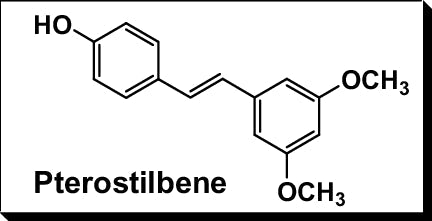
Pterostilbene is a stilbene, the same family of plant compounds as resveratrol. Chemically it is resveratrol with two of its three hydroxyl groups replaced by methoxy groups (a dimethyl ether). This small change makes it more fat-soluble and more resistant to being broken down, so it tends to stay in the body longer. A 2018 review concluded that pterostilbene is more metabolically stable and usually more pharmacologically active than resveratrol, and that both are generally considered safe for human consumption. [1] Blueberries contain only small amounts, so supplements are made from plant extracts or produced by synthesis.
What the Research Shows
The main human trial, run at the University of Mississippi Medical Center, randomized 80 adults with high cholesterol to pterostilbene 125 mg twice a day, 50 mg twice a day, 50 mg plus 100 mg of grape extract twice a day, or placebo for 6 to 8 weeks. [2]
- Blood pressure: the high dose lowered systolic blood pressure by 7.8 mmHg and diastolic by 7.3 mmHg. [2]
- LDL cholesterol: pterostilbene on its own raised LDL by 17.1 mg/dL. This increase was not seen in the group taking it with grape extract, and appeared smaller in people already on cholesterol medication. [2]
- Weight: people not on cholesterol medication had a small weight reduction. [2]
A safety analysis of the same trial found no adverse effects on liver, kidney or blood sugar markers and no major self-reported side effects, and concluded that pterostilbene is generally safe in humans at up to 250 mg a day. [3] This is one modest trial, so more human research is needed.
How Pterostilbene May Support the Body*
- Provides antioxidant support for healthy cells.*
- Supports healthy blood pressure already within the normal range.*
- Supports healthy aging alongside resveratrol.*
Pterostilbene in Zenmen Resvera Plus
| Product | Ingredient | Amount per serving |
|---|---|---|
| Resvera Plus | Pterostilbene | 50 mg |
In Resvera Plus, pterostilbene is paired with 100 mg of grape seed extract, similar to the combination arm in the trial (which took that amount twice a day), plus 250 mg of trans-resveratrol, quercetin, alpha-lipoic acid and black pepper extract.
How to Take It
- Take Resvera Plus as directed on the label, ideally with a meal.
- If you have high cholesterol, ask your doctor to check your lipids after a few months of use.
Safety
- Generally safe: no adverse effects on liver, kidney or blood sugar markers at up to 250 mg a day. [3]
- LDL cholesterol: pterostilbene alone raised LDL in one trial; if you have high cholesterol or heart disease, talk with your doctor first. [2]
- Blood pressure medication: because pterostilbene lowered blood pressure, check with your doctor if you take blood pressure medicines. [2]
- Other medications: resveratrol-type compounds and black pepper extract can affect drug metabolism; ask your pharmacist if you take prescriptions, especially blood thinners.
- Pregnancy and breastfeeding: not enough safety data, so avoid.
FAQ
Is pterostilbene better than resveratrol?
It is more stable in the body and usually more active in lab studies, but it has far fewer human trials. [1] Resvera Plus uses both.
Does pterostilbene raise cholesterol?
In one trial, pterostilbene alone raised LDL, but not when it was taken with grape extract. [2]
Is pterostilbene safe?
A human trial found it generally safe at up to 250 mg a day. [3]
Conclusion
Pterostilbene is a more stable cousin of resveratrol with promising but limited human research and one important cholesterol note. Zenmen Resvera Plus pairs 50 mg with grape seed extract and trans-resveratrol.* Talk with your doctor before use if you have high cholesterol or take blood pressure medication.
References
- Wang, P., & Sang, S. (2018). Metabolism and pharmacokinetics of resveratrol and pterostilbene. BioFactors, 44(1), 16–25. https://doi.org/10.1002/biof.1410
- Riche, D. M., Riche, K. D., Blackshear, C. T., et al. (2014). Pterostilbene on metabolic parameters: a randomized, double-blind, and placebo-controlled trial. Evidence-Based Complementary and Alternative Medicine, 2014, 459165. https://doi.org/10.1155/2014/459165
- Riche, D. M., McEwen, C. L., Riche, K. D., et al. (2013). Analysis of safety from a human clinical trial with pterostilbene. Journal of Toxicology, 2013, 463595. https://doi.org/10.1155/2013/463595
*These statements have not been evaluated by the Food and Drug Administration. This product is not intended to diagnose, treat, cure or prevent any disease. Consult your healthcare provider before use, especially if you are pregnant, nursing, taking medication or have a medical condition.