


Serrapeptase: Benefits, Research, Dosage and Safety
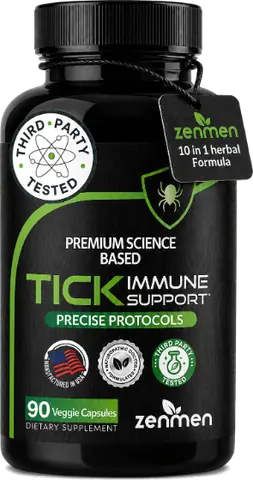
Quick answer: Serrapeptase, also called serratiopeptidase, is a proteolytic (protein-digesting) enzyme produced by the non-pathogenic bacterium Serratia E-15, originally isolated from silkworms. It has been used in Japan and Europe for decades. A 2017 review describes how it may help the body clear inflammatory fluid and break down protein debris and reports that it is absorbed from the gut largely intact. The same review stresses that its precise mechanism is unclear and research evidence is limited. Zenmen Tick Immune Support provides 55 mg of serrapeptase (110,000 SPU) per 3-capsule serving.*
Key takeaways
- Serrapeptase is an enzyme of about 60 kDa from Serratia E-15, a bacterium found in the silkworm gut. [1]
- It is described as fibrinolytic (breaks down fibrin), caseinolytic (breaks down protein) and mucolytic (thins mucus). [1]
- A 2017 review reports that it reaches peak blood levels about an hour after oral intake and concentrates in inflamed tissue. [1]
- Each 3-capsule serving of Zenmen Tick Immune Support contains 55 mg of serrapeptase at 2,000 SPU/mg, for 110,000 SPU.
- Because of its fibrin-dissolving activity, people on blood thinners or with bleeding disorders should not use it without medical advice.
What Is Serrapeptase?
Serrapeptase is an enzyme, not a herb. In the late 1960s, Japanese researchers noticed that silkworms emerging from their cocoons dissolve the tough silk with an enzyme made by a bacterium living in their gut. That bacterium, Serratia species E-15, is non-pathogenic, and the enzyme it produces became known as serratiopeptidase, or serrapeptase for short. [1]
Today serrapeptase is produced by fermentation in controlled conditions, not harvested from silkworms. It has been used in Japan and parts of Europe for several decades, and in the United States it is sold as a dietary supplement. Because it digests proteins such as fibrin and dead tissue, it belongs to a group of supplements called systemic proteolytic enzymes, alongside bromelain (from pineapple) and nattokinase (from fermented soy).
How Serrapeptase Is Thought to Work
In 2017, Manju Tiwari of Barkatullah University in India published a review of serrapeptase in the Asian Journal of Pharmaceutical Sciences, focused on its role in the resolution of inflammation. [1] Inflammation is a normal protective response, and the body also has an active process for switching it off and clearing up afterward. The review proposes several ways serrapeptase may support that process:
- Breaking down inflammatory fluid. Serrapeptase is reported to break down exudates, the protein-rich fluid that collects in tissues during inflammation, helping it drain.
- Calming capillary leakiness. It is reported to reduce the increase in small-blood-vessel permeability triggered by histamine, bradykinin and serotonin.
- Dissolving fibrin and thinning mucus. Its fibrinolytic and mucolytic actions are thought to help clear protein deposits and thick secretions.
- Interacting with inflammatory enzymes. The review suggests it has affinity for cyclooxygenase (COX-1 and COX-2), enzymes involved in producing prostaglandins, but unlike common pain relievers it reportedly does not block the pathway that makes pro-resolving mediators, the molecules that help end inflammation.
The review also states that serrapeptase is absorbed from the digestive tract largely unchanged, reaches peak concentration in about an hour, and accumulates in inflamed tissue. [1] Enzymes are large proteins, so this absorption is notable and is one reason serrapeptase is taken orally rather than only applied topically.
What the Research Says
The review summarizes reports of serrapeptase being studied in a range of settings, including post-surgical swelling, sinus and airway congestion, and joint and soft-tissue discomfort. [1] It is important to be clear about the strength of this evidence:
- The paper is a narrative review, not a systematic review or meta-analysis, and it does not grade the quality or size of the studies it cites.
- The author states that the precise molecular mechanism remains unclear.
- The author also notes that research evidence is limited and broad-spectrum efficacy has not been established.
So serrapeptase has a plausible mechanism, a long history of use and encouraging early reports, but it has not been proven in large, well-controlled trials. That is a fair description to keep in mind when you see bold claims about it online.
How Serrapeptase May Support the Body*
- Promoting a healthy inflammatory response to support tissue and joint comfort.*
- Helping the body break down cellular debris, fibrin and metabolic waste.*
- Supporting healthy circulation, normal sinus function and tissue repair.*
These match the benefits listed for this ingredient in Zenmen Tick Immune Support.
What Does SPU Mean?
Enzymes are measured by activity, not just weight. SPU stands for "serrapeptase units", a measure of how much protein-digesting activity the enzyme has. Zenmen uses serrapeptase at 2,000 SPU per milligram, so 55 mg provides 110,000 SPU. When comparing products, the SPU figure is more meaningful than the milligram amount, because enzyme powders vary in strength.
Serrapeptase in Zenmen Tick Immune Support
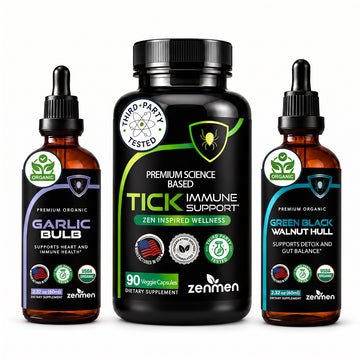
Zenmen Tick Immune Support pairs serrapeptase with nine botanicals and an absorption enhancer. Each 3-capsule serving contains:
- Serrapeptase (Serratia sp. E-15), 55 mg (110,000 SPU)
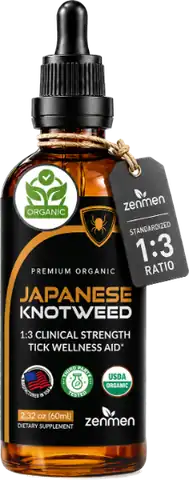
- Japanese knotweed extract (20% resveratrol), 800 mg; cat's claw extract (4% oxindole alkaloids), 250 mg
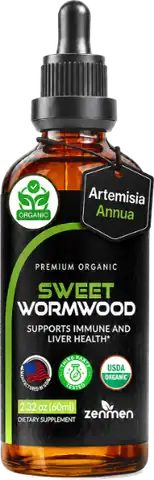
- Cistus incanus 10:1, Cryptolepis sanguinolenta 20:1, sweet wormwood and Chinese skullcap (50% baicalin), 200 mg each
- Alchornea cordifolia 20:1, 100 mg; sarsaparilla 4:1, 60 mg; black pepper extract (95% piperine), 5 mg
In this formula, serrapeptase plays a supporting role: the botanicals provide antioxidant and immune-supporting compounds, while the enzyme is included for its protein-digesting properties.* The capsules are vegan, non-GMO and gluten-free, made in a GMP-certified US facility and third-party tested.
How to Take Serrapeptase
Take 3 capsules of Tick Immune Support daily, with or without food, consistently for about three months, or start with 2 capsules and build up with your healthcare provider's guidance. Serrapeptase is a protein and can be sensitive to stomach acid; some people who take stand-alone serrapeptase prefer to take it between meals. If you already use a separate serrapeptase, nattokinase or other proteolytic enzyme product, talk with a clinician before combining them.
Possible Side Effects and Who Should Avoid Serrapeptase
The 2017 review describes serrapeptase as having minimal side effects, but it does not present systematic safety data. [1] Practical cautions:
- Blood thinners and bleeding disorders. Because serrapeptase dissolves fibrin, it could add to the effect of anticoagulants (such as warfarin), antiplatelet drugs (such as aspirin or clopidogrel) or supplements like fish oil, garlic, ginkgo or nattokinase. Do not combine without medical advice.
- Surgery and dental procedures. Stop at least two weeks before any planned procedure.
- Digestive effects. Occasional stomach upset, nausea or loose stools have been reported with proteolytic enzymes.
- Allergy. Rare skin reactions have been reported; stop if you notice a rash.
- Pregnancy, breastfeeding and children: safety is not established, so avoid unless a clinician approves.
If you have been bitten by a tick, or develop a spreading rash, fever, joint pain or fatigue, see a healthcare professional promptly.
Frequently Asked Questions
What is serrapeptase made from?
It is an enzyme produced by fermentation using Serratia E-15, a non-pathogenic bacterium originally found in the silkworm gut. It contains no silkworm material.
What does serrapeptase do in the body?
It is a protein-digesting enzyme used to support a healthy inflammatory response and help the body break down fibrin and cellular debris.* Its precise mechanism is still being studied. [1]
Is serrapeptase vegan?
Yes. Modern serrapeptase is made by bacterial fermentation, and the serrapeptase in Zenmen Tick Immune Support is part of a vegan formula.
Can I take serrapeptase with blood thinners?
Not without medical supervision, because its fibrin-dissolving activity could increase bleeding risk.
How much serrapeptase is in Zenmen Tick Immune Support?
Each 3-capsule serving contains 55 mg of serrapeptase, equal to 110,000 SPU.
Conclusion
Serrapeptase is a well-known proteolytic enzyme with a fascinating origin, a plausible way of supporting the body's clean-up after inflammation, and a long history of use in Japan and Europe. The evidence is still limited, and its fibrin-dissolving activity calls for caution with blood thinners. In Zenmen Tick Immune Support, 110,000 SPU of serrapeptase complements nine botanicals to support tissue comfort and healthy inflammatory balance.* Speak with your healthcare provider before use, especially if you take medication or have a procedure coming up.
References
- Tiwari, M. (2017). The role of serratiopeptidase in the resolution of inflammation. Asian Journal of Pharmaceutical Sciences, 12(3), 209–215. https://doi.org/10.1016/j.ajps.2017.01.003
*These statements have not been evaluated by the Food and Drug Administration. This product is not intended to diagnose, treat, cure or prevent any disease. Consult your healthcare provider before use, especially if you are pregnant, nursing, taking medication or have a medical condition.


