

Sarsaparilla (Smilax ornata): Steroidal Saponins, Traditional Uses, What the Evidence Shows and Safety
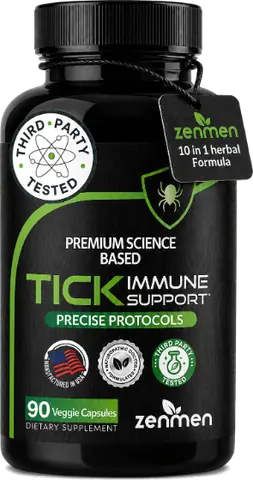
Quick answer: Sarsaparilla (Smilax ornata) is a thorny climbing vine from Central America and the Caribbean whose root and rhizome have been used for centuries as an herbal tonic and flavoring. It is rich in steroidal saponins and flavonoids such as astilbin, and Smilax species are used in folk medicine for inflammatory complaints and in Chinese herbal practice for joint discomfort. Its chemistry is well documented, but human research is limited. Zenmen uses sarsaparilla as a supporting ingredient in Tick Immune Support capsules (60 mg of 4:1 extract) and Tick Immune Support Tincture (50 mg root, dry herb equivalent).*
Key takeaways
- Smilax is a genus of about 300 climbing shrubs; S. ornata is often called Jamaican or Honduran sarsaparilla. [1]
- A 2017 review catalogued 104 steroidal saponins reported from Smilax species. [1]
- A 2012 analysis of a commercial S. ornata root sample isolated five steroidal saponins, two newly described. [2]
- Smilax species are used in folk medicine for inflammatory disorders and in Chinese medicine for joint pain. [1]
- Saponins may affect how some medicines are absorbed; check with a pharmacist if you take prescriptions.
What Is Sarsaparilla?
Sarsaparilla is the common name for several tropical Smilax species, thorny woody vines used widely across Asia and the Americas. [1] The name likely comes from the Spanish zarza (bramble) and parrilla (little vine). Spanish traders brought the root to Europe in the 1500s, and by the 1800s sarsaparilla tonics were sold everywhere as "blood purifiers", later giving sarsaparilla soda its name, although most modern sodas contain no real root. "Indian sarsaparilla" (Hemidesmus indicus) is an unrelated plant, so the Latin name on a label matters.
Key Compounds
- Steroidal saponins, soap-like compounds with a steroid-shaped core, in spirostane, isospirostane, furostane, pregnane and cholestane groups. Sarsasapogenin and smilagenin are among the best-known cores. [1] A 2012 study in Steroids identified two new furostanol saponins, sarsaparilloside B and C, in S. ornata root. [2]
- Flavonoids, notably astilbin, described as having distinctive immune-modulating activity in research. [1]
- Phenylpropanoids and stilbenoids, additional plant compounds in the genus. [1]
Traditional Uses
Smilax species are extensively used in folk medicine for inflammatory disorders, and some are used in Chinese herbal medicine for joint pain and swelling. [1] In European and American herbalism, sarsaparilla was classed as an "alterative", an old term for herbs believed to gradually support the body's normal cleansing and skin health.
What the Evidence Shows, and Doesn't
- Chemistry is well documented. Many saponins and flavonoids have been isolated and characterized. [1] [2]
- Biological activity is mostly lab-based, often on isolated compounds or other Smilax species.
- Human data are scarce. Zenmen includes sarsaparilla as a traditional supporting herb, and we think it is important to say so plainly.
How Sarsaparilla May Support the Body*
- Supports the body's natural detoxification processes and liver health.*
- Helps maintain a balanced, healthy immune response.*
- Promotes healthy skin and supports joint function.*
Sarsaparilla in Zenmen Products
| Product | Form | Amount per serving |
|---|---|---|
| Tick Immune Support (capsules) | Rhizome extract 4:1 (about 240 mg raw root) | 60 mg per 3 capsules |
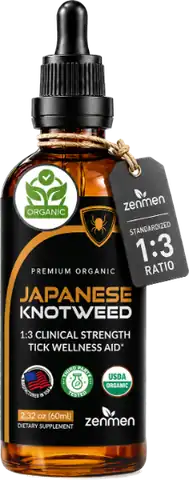
| Tick Immune Support Tincture | Organic root, liquid extract | 50 mg dry herb equivalent |
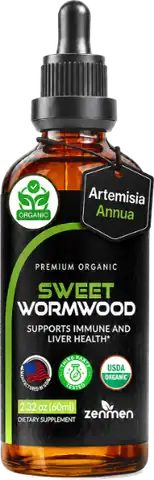
In both formulas sarsaparilla is a minor, supporting ingredient alongside Japanese knotweed, Cryptolepis, cat's claw, Chinese skullcap and sweet wormwood. The modest amounts reflect its traditional role as a complementary herb and keep the saponin load gentle on the stomach. Liquid preparations have always been a classic way to take sarsaparilla, which makes the tincture a natural modern format.
How to Take It
- Capsules: 3 capsules daily for about three months, or start with 2.
- Tincture: the serving on the label, directly or in water or juice.
- Taking either with food can reduce stomach sensitivity from saponins. Avoid taking both formulas together unless a clinician advises it.
Safety and Who Should Avoid It
- Stomach irritation: saponins can irritate the digestive tract in large amounts.
- Medication absorption: saponins may change how some drugs are absorbed; ask your pharmacist if you take heart medications, diuretics, lithium or other narrow-margin drugs.
- Kidney conditions: check with your doctor, given its traditional use as a mild diuretic.
- Adulteration: choose identity-tested products, as "sarsaparilla" is sometimes the wrong species.
- Pregnancy, breastfeeding and under 18: avoid unless a clinician approves.
If you have had a tick bite or develop a rash, fever, fatigue or joint pain, see a healthcare professional promptly.
FAQ
What is sarsaparilla good for?
Traditionally it is used to support the body's natural cleansing processes, skin health and joint comfort.* Human research is limited.
Is sarsaparilla soda made from sarsaparilla?
It was originally flavored with the root, but most modern sarsaparilla sodas contain no real root.
What are sarsaparilla saponins?
Steroid-shaped plant compounds attached to sugars; over 100 have been identified across the Smilax genus. [1]
Conclusion
Sarsaparilla is a time-honored herbal tonic with well-mapped saponin chemistry and a modest research base. In Tick Immune Support capsules and Tick Immune Support Tincture, it plays a supporting role for the body's natural cleansing, skin and joint health.* Talk with your provider before use if you take prescription medication.
References
- Tian, L.-W., Zhang, Z., Long, H.-L., & Zhang, Y.-J. (2017). Steroidal Saponins from the Genus Smilax and Their Biological Activities. Natural Products and Bioprospecting, 7, 283–298. https://doi.org/10.1007/s13659-017-0139-5
- Challinor, V. L., et al. (2012). Steroidal saponins from the roots of Smilax sp.: structure and bioactivity. Steroids, 77(5), 504–511. https://doi.org/10.1016/j.steroids.2012.01.009
*These statements have not been evaluated by the Food and Drug Administration. This product is not intended to diagnose, treat, cure or prevent any disease. Consult your healthcare provider before use, especially if you are pregnant, nursing, taking medication or have a medical condition.