Zinc: Immune, Skin, Prostate and Hair Research, How Much You Need, and Safety
Quick answer: Zinc is an essential mineral the body cannot store, so it must come from food or supplements daily. According to the NIH Office of Dietary Supplements, hundreds of enzymes need zinc, and it supports immune function, protein and DNA synthesis, wound healing, cell growth and taste. Reviews describe zinc as essential for the development and function of immune cells, and the prostate holds unusually high zinc levels. Adults need 8–11 mg a day, and the upper limit from all sources is 40 mg. Zenmen uses zinc in five formulas, from 10 mg to 25 mg per serving, so if you take more than one, add up your total.*
Key takeaways
- Adult RDA: 11 mg/day for men and 8 mg/day for women; upper limit 40 mg/day. [1]
- Zinc is important for the development and function of innate and adaptive immune cells. [2]
- A meta-analysis of 35 trials (1,995 adults) found zinc supplements reduced CRP and increased CD4 levels. [3]
- Zinc helps the prostate retain citrate, but high supplemental doses have been linked to prostate concerns. [4] [5]
- Long-term intake of 50 mg/day or more can impair copper absorption. [1]
What Is Zinc?
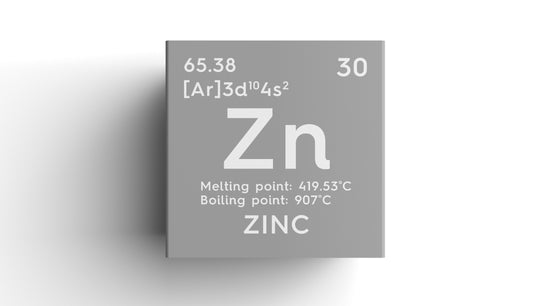
Zinc is a trace mineral found in every cell. Good food sources include oysters, red meat, poultry, beans, nuts and whole grains. Supplements use forms such as zinc sulphate (sulfate), gluconate, acetate and bisglycinate; labels list elemental zinc rather than the weight of the whole compound. [1] Zinc bisglycinate is zinc bound to the amino acid glycine, a chelated form that is gentle on the stomach. Zinc L-carnosine, used in Zenmen's Mastic Gum Supplement, is a different compound covered in its own article.
What the Research Shows
Immune function
A 2016 review by Maares and Haase explains that disrupted zinc balance impairs lymphocyte formation and activation, alters cytokine signaling, and weakens the ability of immune cells to engulf and destroy microbes. [2] A 2019 review in Advances in Nutrition found zinc has direct antiviral activity and stimulates antiviral immunity, but cautioned that the clinical benefit of supplements for preventing or treating viral infections is still unclear. [6] A 2022 meta-analysis of 35 randomized trials in 1,995 adults found zinc supplementation significantly reduced CRP, hs-CRP and neutrophils and increased CD4 levels. [3] A small Bayer-funded pooled analysis found 1,000 mg vitamin C plus 10 mg zinc reduced runny nose over 5 days of a cold. [7]
Prostate
Zinc's main role in prostate health is helping the gland retain citrate, and zinc levels have been reported as lower in men with prostate cancer than in controls. [4] Epidemiologic studies on zinc intake and prostate cancer have produced conflicting results. [8] A 2004 review by Moyad described the evidence for zinc in prostate conditions as limited and warned that excess intake, especially from individual supplements, may encourage progression from benign enlargement toward cancer. [5] This is why moderate doses matter.
Hair and skin
A 2024 systematic review of 49 studies found deficiencies or imbalances of several micronutrients, including zinc, may contribute to androgenetic alopecia, though the evidence is not entirely consistent. [9] A 2022 meta-analysis also examined serum zinc levels in androgenetic alopecia. [10] Low zinc can affect the skin, taste and smell, and slow wound healing. [1] Zinc has not been studied in controlled trials for body odor.
How Zinc May Support the Body*
- Supports normal immune function and immune cell signaling.*
- Supports healthy skin, mucosal barriers and normal hair growth.*
- Supports normal prostate function in men.*
Zinc in Zenmen Products
| Product | Form | Amount per serving |
|---|---|---|
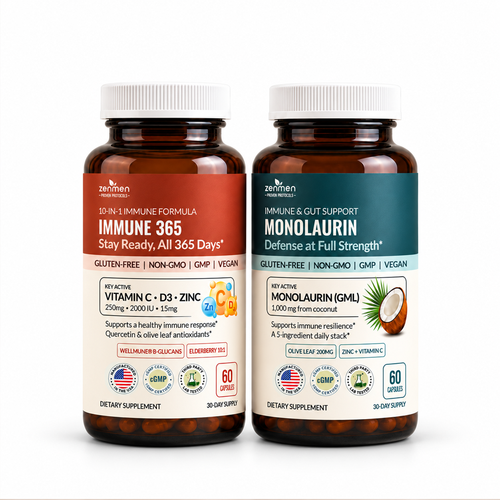
| Immune 365 | Zinc bisglycinate | 15 mg (2 capsules) |
| 10-in-1 Prostate Support | Zinc bisglycinate | 15 mg (2 capsules) |
| Hair Growth & Root Defense | Zinc bisglycinate | 15 mg |
| Monolaurin 1,000 mg | Zinc bisglycinate | 10 mg (2 capsules) |
| Body Odor Supplement | Zinc sulphate | 25 mg (2 capsules), with 1.3 mg copper |
Stacking products? Each formula alone stays under the 40 mg upper limit, but combinations can exceed it. For example, Body Odor Supplement plus Immune 365 provides 40 mg, and adding a third zinc-containing formula goes over. Check every label, including multivitamins.
How to Take It
Follow each product's label. Zinc can cause nausea on an empty stomach, so taking it with a meal is often easier. Separate zinc from iron supplements of 25 mg or more, which can reduce its absorption. [1]
Safety and Interactions
- Too much zinc can cause nausea, vomiting, stomach upset, headache and loss of appetite. [1]
- Copper: sustained intake of 50 mg/day or more can impair copper absorption, reduce immune function and lower HDL cholesterol. [1]
- Antibiotics: take quinolone or tetracycline antibiotics at least 2 hours before or 4–6 hours after zinc. [1]
- Penicillamine: separate by at least 1 hour; thiazide diuretics increase zinc loss. [1]
- Prostate: men with prostate conditions should avoid high-dose zinc and discuss intake with their doctor. [5]
FAQ
How much zinc do I need?
11 mg/day for adult men and 8 mg/day for women, with an upper limit of 40 mg/day. [1]
Which form of zinc is best?
Several forms are well absorbed. Bisglycinate is gentle on the stomach; sulphate is one of the most studied forms.
Can I take more than one Zenmen product with zinc?
Yes, but add up your total so you stay under 40 mg a day.
Conclusion
Zinc is an essential mineral with a clear role in immunity, skin, hair and prostate health. Zenmen includes moderate amounts in Immune 365, 10-in-1 Prostate Support, Hair Growth & Root Defense, Monolaurin and the Body Odor Supplement.* Check your total intake and medications with your provider.
References
- National Institutes of Health, Office of Dietary Supplements. Zinc: Fact Sheet for Health Professionals. https://ods.od.nih.gov/factsheets/Zinc-HealthProfessional/
- Maares, M., & Haase, H. (2016). Zinc and immunity: An essential interrelation. Archives of Biochemistry and Biophysics, 611, 58–65. https://pubmed.ncbi.nlm.nih.gov/27021581/
- Jafari, A., et al. (2022). Zinc supplementation and immune factors in adults: a systematic review and meta-analysis of randomized clinical trials. Critical Reviews in Food Science and Nutrition. https://pubmed.ncbi.nlm.nih.gov/33356467/
- Karunasinghe, N. (2022). Zinc in Prostate Health and Disease: A Mini Review. Biomedicines. https://pubmed.ncbi.nlm.nih.gov/36551962/
- Moyad, M. A. (2004). Zinc for prostate disease and other conditions: a little evidence, a lot of hype, and a significant potential problem. Urologic Nursing. https://pubmed.ncbi.nlm.nih.gov/15054912/
- Read, S. A., et al. (2019). The Role of Zinc in Antiviral Immunity. Advances in Nutrition, 10(4), 696–710. https://pubmed.ncbi.nlm.nih.gov/31305906/
- Maggini, S., Beveridge, S., & Suter, M. (2012). A combination of high-dose vitamin C plus zinc for the common cold. Journal of International Medical Research, 40(1), 28–42. https://pubmed.ncbi.nlm.nih.gov/22429343/
- Costello, L. C., & Franklin, R. B. (2005). Zinc and prostate cancer: a critical scientific, medical, and public interest issue (United States). Cancer Causes & Control. https://pubmed.ncbi.nlm.nih.gov/16132800/
- Wang, R., et al. (2024). Micronutrients and Androgenetic Alopecia: A Systematic Review. Molecular Nutrition & Food Research. https://pubmed.ncbi.nlm.nih.gov/39440586/
- Chang, H. C., et al. (2022). Association between serum zinc levels and androgenetic alopecia: a systematic review and meta-analysis. Journal of Cosmetic Dermatology. https://pubmed.ncbi.nlm.nih.gov/34708926/
*These statements have not been evaluated by the Food and Drug Administration. This product is not intended to diagnose, treat, cure or prevent any disease. Consult your healthcare provider before use, especially if you are pregnant, nursing, taking medication or have a medical condition.