Spirulina (Arthrospira platensis): Nutrition, Antioxidant Research and Safety
Quick answer: Spirulina (Arthrospira platensis) is a blue-green alga, technically a cyanobacterium, that has been eaten for centuries and is about 60% protein. It also provides beta-carotene, minerals, iron and the blue antioxidant pigment phycocyanin. Meta-analyses of small trials found marginal improvements in total antioxidant capacity and some inflammation markers. Spirulina is generally well tolerated, but it must be grown in controlled conditions because blue-green algae can be contaminated with liver-toxic microcystins and heavy metals, and people with PKU or autoimmune conditions should avoid it. Zenmen Blue + Green Spirulina Powder provides 3,000 mg of organic spirulina per scoop, plus 1,000 mg of blue spirulina extract.*
Key takeaways
- Spirulina has been used as a food for centuries and is about 60% protein. [1]
- Across 9 trials (415 people), spirulina had a marginal effect on total antioxidant capacity and superoxide dismutase. [2]
- Across 11 trials (465 people), effects on IL-6 and oxidative markers were marginal overall, and there was no effect on TNF-α. [3]
- Blue-green algae can be contaminated with microcystins and can absorb heavy metals, so buy from a trusted source. [4]
- People with phenylketonuria (PKU) or autoimmune disorders should avoid spirulina. [1]
What Is Spirulina?
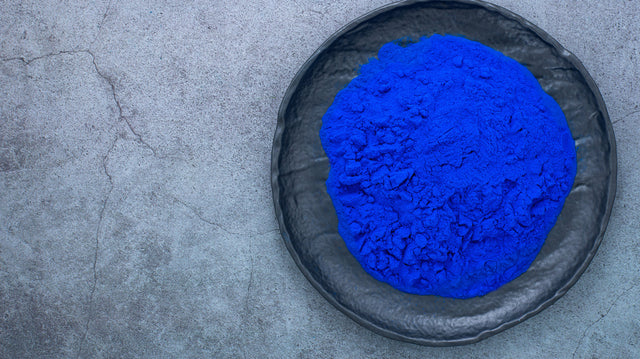
Spirulina is a microscopic, spiral-shaped cyanobacterium that thrives in warm, alkaline lakes. It has been used as a food source for centuries and is now sold as powder, tablets and capsules and added to smoothies and snacks. It is about 60% protein, a richer source than most vegetables, and also provides beta-carotene, minerals and the fatty acid gamma-linolenic acid. [1] Its blue pigment, phycocyanin, accounts for up to 20% of its dry weight and is thought to be its main active compound. [5] Zenmen uses Hawaiian-grown organic spirulina.
What the Research Shows
Antioxidant capacity
A 2021 meta-analysis of 9 controlled trials with 415 participants found spirulina had a marginal, borderline-significant effect on total antioxidant capacity and on the antioxidant enzyme superoxide dismutase, and no significant effect on glutathione peroxidase. [2]
Inflammation and oxidative stress
A second 2021 meta-analysis of 11 trials with 465 participants found marginal decreases in IL-6 and in a marker of oxidative damage (TBARS), which became significant in people with a normal BMI, and no significant effect on TNF-α or malondialdehyde. [3]
Immune support
Spirulina is often promoted for immune health, but Mount Sinai notes that more research in people is needed. [4]
How Spirulina May Support the Body*
- Provides plant protein, beta-carotene, iron and other nutrients.*
- Provides antioxidant support.*
- Supports overall nutritional wellness and energy.*
- Supports normal immune function.*
Spirulina in Zenmen Blue + Green Spirulina Powder
| Product | Ingredient | Amount per scoop |
|---|---|---|
| Blue + Green Spirulina Powder | Organic Hawaiian spirulina | 3,000 mg |
| Blue + Green Spirulina Powder | Blue spirulina extract (phycocyanin) | 1,000 mg |
Together they provide 4,000 mg per scoop. See our blue spirulina guide for more on phycocyanin.
How to Take It
- Mix one scoop of Blue + Green Spirulina Powder into water, a smoothie or your favorite drink.
- Start with half a scoop if you are new to spirulina, to let your digestion adjust.
Safety
- Contamination: blue-green algae can be contaminated with microcystins and can absorb heavy metals from the water they grow in, so buy from a trusted brand. [4]
- Liver: liver injury from spirulina itself is very rare, if it occurs at all. [5]
- PKU: people with phenylketonuria should avoid spirulina because of its phenylalanine content. [1]
- Autoimmune conditions and blood thinners: spirulina may worsen symptoms of autoimmune disorders and can interfere with blood clotting; ask your doctor first if you have an autoimmune condition, take immunosuppressants or take blood thinners. [1]
- Side effects: few side effects are reported at recommended doses; some people notice mild digestive upset at first. [1]
- Pregnancy and breastfeeding: ask your clinician before use.
FAQ
What is spirulina good for?
It is a nutrient-dense food rich in protein, beta-carotene and minerals, with modest research on antioxidant markers. [2]
Is spirulina safe?
Spirulina from controlled, tested sources is generally well tolerated, but contamination is a concern with poorly sourced products. [4]
Who should not take spirulina?
People with PKU or autoimmune disorders, and anyone taking blood thinners without a doctor's advice. [1]
Conclusion
Spirulina is a long-used, protein-rich food with modest antioxidant research and an important sourcing rule. Zenmen Blue + Green Spirulina Powder combines 3,000 mg of organic spirulina with 1,000 mg of blue spirulina extract.* Avoid it if you have PKU or an autoimmune condition.
References
- Harvard Health Publishing. By the way, doctor: Is spirulina good for you? https://www.health.harvard.edu/staying-healthy/by-the-way-doctor-is-spirulina-good-for-you
- Naeini, F., Zarezadeh, M., Mohiti, S., Tutunchi, H., Ebrahimi Mamaghani, M., & Ostadrahimi, A. (2021). Spirulina supplementation as an adjuvant therapy in enhancement of antioxidant capacity: A systematic review and meta-analysis of controlled clinical trials. International Journal of Clinical Practice, 75(10), e14618. https://doi.org/10.1111/ijcp.14618
- Mohiti, S., Zarezadeh, M., Naeini, F., et al. (2021). Spirulina supplementation and oxidative stress and pro-inflammatory biomarkers: A systematic review and meta-analysis of controlled clinical trials. Clinical and Experimental Pharmacology and Physiology, 48(8), 1059–1069. https://doi.org/10.1111/1440-1681.13510
- Mount Sinai Health Library. Spirulina. https://www.mountsinai.org/health-library/supplement/spirulina
- LiverTox: Clinical and Research Information on Drug-Induced Liver Injury. Spirulina. National Institute of Diabetes and Digestive and Kidney Diseases. https://www.ncbi.nlm.nih.gov/books/NBK548312/
*These statements have not been evaluated by the Food and Drug Administration. This product is not intended to diagnose, treat, cure or prevent any disease. Consult your healthcare provider before use, especially if you are pregnant, nursing, taking medication or have a medical condition.