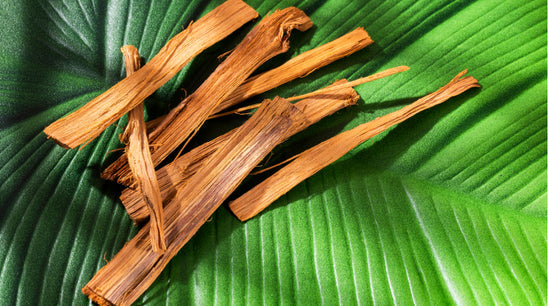
Cryptolepis sanguinolenta: Cryptolepine, Traditional Uses, Root vs Leaf, and Safety
Quick answer: Cryptolepis sanguinolenta is a climbing shrub native to West Africa whose blood-red root has a long history in traditional Ghanaian herbalism. In West Africa it is traditionally used for conditions including diarrhea and respiratory complaints. Its main compound is cryptolepine, an alkaloid that is the focus of most research on the plant. A 2017 review describes a substantial body of lab and animal research on the plant and its compounds, while identifying gaps that still need study. Zenmen uses a 20:1 leaf extract in Tick Immune Support capsules and the root in Tick Immune Support Tincture, 200 mg each.*
Key takeaways
- Cryptolepis is a thin-stemmed shrub found in Africa and used in West African traditional medicine for diarrhea and respiratory conditions, among others. [1]
- A 2017 review covers its traditional uses, phytochemistry, pharmacology and toxicology. [1]
- Cryptolepine is the plant's main indoloquinoline alkaloid.
- Animal work found Cryptolepis safe at doses under 500 mg/kg, far above supplement amounts. [2]
- Avoid if pregnant, trying to conceive or breastfeeding. [2]
What Is Cryptolepis?
Cryptolepis is a slender, twining shrub in the dogbane family (Apocynaceae) that grows in the forests and savannas of Ghana, Nigeria and Côte d'Ivoire. [1] The name sanguinolenta refers to the blood-red root and its reddish extracts. In Ghana, where it is known as nibima, the root has traditionally been prepared as a bitter decoction, and Ghanaian institutions have produced standardized preparations for decades. Herbal practitioners in North America and Europe now use it as a core botanical in seasonal wellness formulas.
Key Compounds
- Cryptolepine, the main indoloquinoline alkaloid and the compound tested in most studies.
- Neocryptolepine, isocryptolepine and quindoline, related alkaloids in smaller amounts.
- Polyphenols that may contribute antioxidant activity.
What the Research Shows
A 2017 review in Advances in Pharmacological Sciences by Osafo, Mensah and Yeboah brought together the plant's traditional uses, phytochemical composition, pharmacological activities, and reported pharmacokinetic and toxicological studies. It concluded that the research on Cryptolepis and its compounds gives an important body of evidence of potential therapeutic benefit and makes it a source of lead compounds, while also identifying grey areas where more research is needed. [1] Most of this work was done in the lab and in animals, so its role in the formula is best described as traditional support rather than a proven effect.*
How Cryptolepis May Support the Body*
- Helps maintain a healthy microbial balance throughout the body.*
- Promotes robust immune function and physical resilience, particularly during seasonal challenges.*
- Supports the body's natural cellular defense and repair pathways.*
Cryptolepis in Zenmen Products
| Product | Plant part and form | Amount per serving |
|---|---|---|
| Tick Immune Support (capsules) | Leaf, 20:1 extract | 200 mg per 3 capsules |
| Tick Immune Support Tincture | Organic root, liquid extract | 200 mg dry herb equivalent |
"Dry herb equivalent" means the amount of dried root used to make the liquid in each serving; it is not directly comparable with a concentrated 20:1 extract. The capsules combine Cryptolepis with nine other ingredients. The tincture is a six-herb organic liquid closer to the traditional root preparation. Avoid taking both unless a clinician advises it.
How to Take It
- Capsules: 3 capsules daily, with or without food, for about three months; many start with 2. Capsules avoid Cryptolepis's very bitter taste.
- Tincture: follow the label; adding it to water or juice softens the bitterness.
Safety
- Pregnancy, fertility and breastfeeding: possible anti-fertility and embryotoxic effects need further study, so avoid. [2]
- Safety margin: animal work found Cryptolepis safe at doses under 500 mg/kg, far above supplement amounts. [2]
- Medications: check with your pharmacist, especially for blood thinners or blood sugar medication.
- Digestive upset: bitter herbs can cause nausea; take with food if needed. Not for under 18 without supervision.
If you have been bitten by a tick or develop fever, chills, a rash or unusual fatigue, contact a healthcare professional promptly.
FAQ
What is Cryptolepis used for traditionally?
In West Africa it is traditionally used for conditions including diarrhea and respiratory complaints. [1]
Is Cryptolepis root or leaf better?
The root is the traditional part; leaf extracts are also used. Both contain cryptolepine.
What is cryptolepine?
The main indoloquinoline alkaloid in Cryptolepis and the focus of most research.
Conclusion
Cryptolepis is a traditional West African botanical with a growing, mostly preclinical research base. Zenmen uses the leaf in Tick Immune Support capsules and the root in Tick Immune Support Tincture to support microbial balance and immune resilience.* Speak with your provider before use, especially regarding pregnancy and medications.
References
- Osafo, N., Mensah, K. B., & Yeboah, O. K. (2017). Phytochemical and Pharmacological Review of Cryptolepis sanguinolenta (Lindl.) Schlechter. Advances in Pharmacological Sciences, 2017, 3026370. https://doi.org/10.1155/2017/3026370
- Shor, S. M., & Schweig, S. K. (2023). The Use of Natural Bioactive Nutraceuticals in the Management of Tick-Borne Illnesses. Microorganisms, 11(7), 1759. https://doi.org/10.3390/microorganisms11071759
*These statements have not been evaluated by the Food and Drug Administration. This product is not intended to diagnose, treat, cure or prevent any disease. Consult your healthcare provider before use, especially if you are pregnant, nursing, taking medication or have a medical condition.