
The science

Evidence, not marketing

We build formulas from the Buhner protocol literature and modern in-vitro screening, and we publish the doses and the studies.

7 / 10
Capsule herbs among those studied by Johns Hopkins researchers
20%
Standardized trans-resveratrol in our Knotweed
8 / 8
Formulas with doses published to the exact milligram
100%
USDA organic, 3rd-party tested, made in USA

The two-threat model

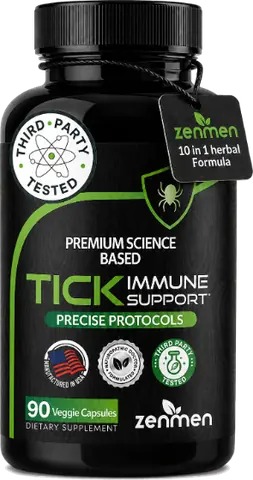
A single tick can transmit both bacterial (Borrelia, Bartonella) and parasitic (Babesia) organisms. Because they are biologically distinct, they respond to different botanical chemistries. Our protocol system covers both fronts rather than assuming a single cause.

Vannier E & Krause PJ. N Engl J Med 366:2397, 2012.

Persister-form activity

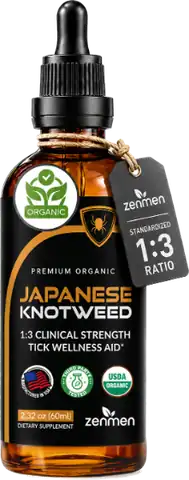
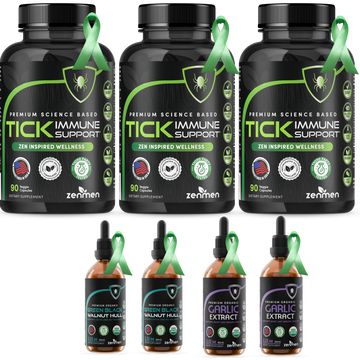
In-vitro screening by researchers affiliated with the Johns Hopkins Bloomberg School of Public Health included several botanicals we use, among them Japanese Knotweed and Green Black Walnut hull, in laboratory screening for tick-borne research.

Feng J et al. Frontiers in Medicine, 2020.

Artemisinin and Babesia

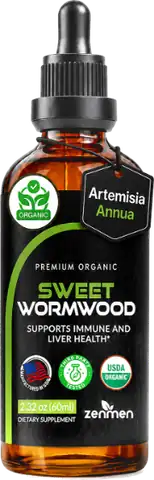
Artemisia annua is the source plant for artemisinin, the Nobel Prize-winning compound. The same reactive-oxygen mechanism has drawn scientific interest in relation to Babesia, a tick-borne organism.

Tu Y. Nobel Lecture, Stockholm, 2015.

Serrapeptase, at a real dose

We include a meaningful dose of Serrapeptase, a proteolytic enzyme studied for biofilm-degrading activity, so formulas can reach their target.

Sapi E et al. PLoS ONE 7(10), 2012.