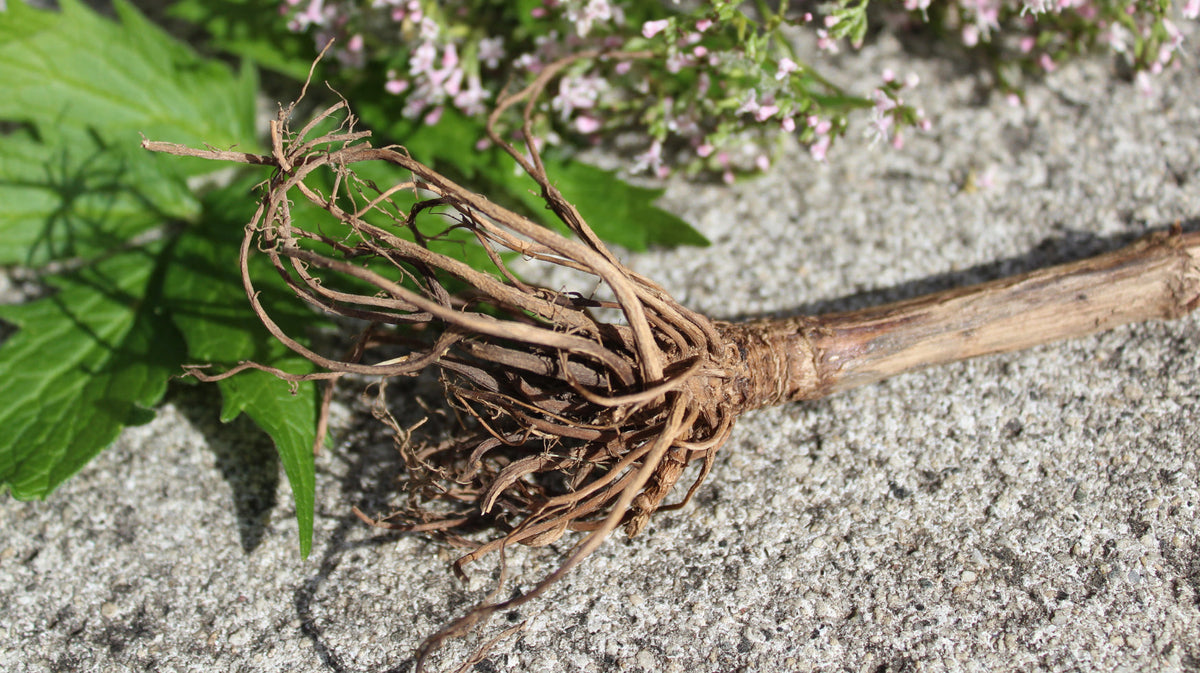
Valerian Root (Valeriana officinalis): Sleep Research, Dosage and Safety
Quick answer: Valerian (Valeriana officinalis) is a plant from Europe and Asia whose roots have been used for sleep and nervous tension since ancient Greece and Rome. A meta-analysis of 18 trials found valerian may improve how people rate their sleep, but it did not shorten the time to fall asleep on objective measures, and the NIH describes the research as inconsistent. The American Academy of Sleep Medicine recommends against using valerian alone for chronic insomnia. It is generally considered safe for most adults in the short term. Zenmen Sleep Clean contains 75 mg of valerian root extract per 2-capsule serving as part of a broader calming blend.*
Key takeaways
- A meta-analysis of 18 trials found valerian may help subjective sleep, but not on quantitative or objective measures. [1]
- People taking valerian were about 37% more likely to report improved sleep quality than with placebo. [1]
- Sleep research results are inconsistent, and sleep-medicine guidelines recommend against valerian for chronic insomnia. [2]
- 300 to 600 mg a day for up to 6 weeks is generally considered safe for most adults. [2]
- Do not combine valerian with alcohol or sedatives. [2]
What Is Valerian?
Valerian is a flowering plant native to Europe and Asia that also grows in North America. Its roots and rhizomes (underground stems) are used medicinally, and it has been used since the times of ancient Greece and Rome; today it is promoted for insomnia, anxiety and stress. [2] The dried root is famous for its strong, earthy smell. Its compounds include valerenic acid, valepotriates and essential oils, which are thought to influence the brain's calming GABA system.
What the Research Shows
A 2010 meta-analysis in Sleep Medicine pooled 18 randomized placebo-controlled trials. Valerian did not meaningfully change the time it took to fall asleep or sleep-quality scores on rating scales, but people taking it were more likely to report that their sleep quality improved (relative risk 1.37). The authors concluded that valerian may help subjective symptoms of insomnia, but its effectiveness had not been shown with quantitative or objective measures. [1]
The NIH describes sleep research on valerian as inconsistent, notes that the American Academy of Sleep Medicine's 2017 guidelines recommend against using it for chronic insomnia in adults, and says there isn't enough evidence to know whether it helps anxiety. [2] For persistent sleep problems, cognitive behavioral therapy for insomnia (CBT-I) and a doctor's assessment come first.
How Valerian May Support the Body*
- Supports relaxation before bedtime.*
- Supports a feeling of restful sleep.*
- Helps ease occasional nervous tension.*
Valerian in Zenmen Sleep Clean
| Product | Form | Amount per serving |
|---|---|---|
| Sleep Clean | Valerian root extract | 75 mg per 2 capsules |
75 mg is a modest supporting amount, well below the 300 to 600 mg typically used on its own. In Sleep Clean, valerian works alongside ashwagandha, lemon balm, passionflower, L-theanine, chamomile, 5-HTP, magnesium and black pepper extract.
How to Take It
- Take 2 capsules of Sleep Clean with water 30 to 60 minutes before bedtime.
- Long-term safety is unknown, so review ongoing use with your provider. [2]
Safety
- Short-term use: generally considered safe for most adults at 300 to 600 mg a day for up to 6 weeks; long-term safety is unknown. [2]
- Side effects: headache, stomach upset, mental dullness, excitability, uneasiness and vivid dreams. Stopping suddenly after long-term use may cause withdrawal symptoms. [2]
- Liver: liver injury has been reported in very rare cases, most often when valerian was combined with other herbal products. [2]
- Alcohol and sedatives: do not combine them with valerian, and check with your provider before using it with any medication. [2]
- Pregnancy and breastfeeding: little is known about safety, so avoid. [2]
FAQ
Does valerian root help you sleep?
It may improve how people rate their sleep, but objective measures have not shown a clear benefit. [1]
Is valerian safe?
Short-term use is generally considered safe for most adults; avoid alcohol and sedatives with it. [2]
Why does valerian smell so strong?
The dried root contains volatile compounds, including isovaleric acid, that give it its earthy, pungent smell.
Conclusion
Valerian is one of the oldest sleep herbs, with mixed evidence that it helps people feel they slept better. Zenmen Sleep Clean includes 75 mg as a supporting part of its bedtime blend.* See a doctor for persistent insomnia, and do not combine valerian with alcohol or sedatives.
References
- Fernández-San-Martín, M. I., Masa-Font, R., Palacios-Soler, L., Sancho-Gómez, P., Calbó-Caldentey, C., & Flores-Mateo, G. (2010). Effectiveness of Valerian on insomnia: a meta-analysis of randomized placebo-controlled trials. Sleep Medicine, 11(6), 505–511. https://doi.org/10.1016/j.sleep.2009.12.009
- National Center for Complementary and Integrative Health. Valerian. Last updated May 2025. https://www.nccih.nih.gov/health/valerian
*These statements have not been evaluated by the Food and Drug Administration. This product is not intended to diagnose, treat, cure or prevent any disease. Consult your healthcare provider before use, especially if you are pregnant, nursing, taking medication or have a medical condition.