Monolaurin (Glycerol Monolaurate): What It Is, Regulation and Safety
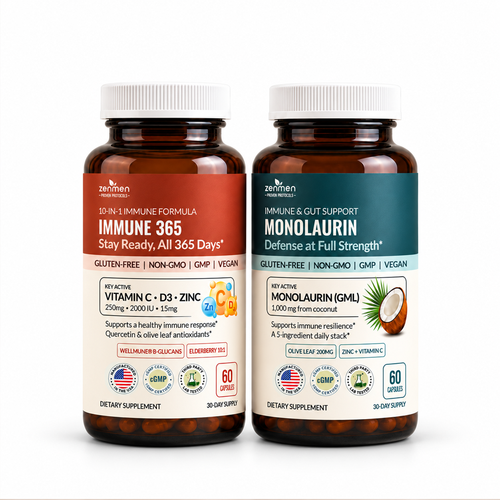
Quick answer: Monolaurin, or glycerol monolaurate (GML), is a lipid made from lauric acid, the main fatty acid in coconut oil, bonded to glycerol. It occurs naturally in small amounts in coconut and breast milk. Monoglycerides made from edible fatty acids such as lauric acid are affirmed by the FDA as generally recognized as safe (GRAS) for use in food, where they work as emulsifiers. Monolaurin is popular as a supplement for immune and gut support, but no clinical trials have tested oral monolaurin supplements in people. Zenmen uses coconut-derived monolaurin in Monolaurin 1,000 mg and Gut Sweep (300 mg per serving).*
Key takeaways
- Monolaurin is lauric acid (from coconut) bonded to glycerol.
- Mono- and diglycerides made from edible fatty acids, including lauric acid, are affirmed as GRAS food ingredients. [1]
- In food, monoglycerides are used as emulsifiers and surface-active agents. [1]
- No human clinical trials have tested oral monolaurin supplements.
- Avoid it if you are allergic to coconut.
What Is Monolaurin?
Monolaurin is a monoglyceride: one 12-carbon lauric acid molecule attached to glycerol. Coconut oil is about half lauric acid but contains little monolaurin itself, so supplements are made from coconut-derived lauric acid. The body also forms some monolaurin when it digests fats that contain lauric acid. In foods and cosmetics, monolaurin is used as an emulsifier and preservative.
How It Is Made and Regulated
U.S. federal regulations describe mono- and diglycerides as mixtures prepared from edible fats, oils or fat-forming acids, made by reacting glycerin with fatty acids such as lauric, oleic, palmitic or stearic acid. They are affirmed as generally recognized as safe for use in food as emulsifiers, surface-active agents and related functions, in line with good manufacturing practice. [1] Supplement amounts, such as 1,000 mg a day, are higher than typical food uses.
What the Research Shows
Interest in monolaurin comes from laboratory research on how lipids like GML interact with cell membranes. These studies have applied monolaurin directly to cells or to the skin, not taken it by mouth. No clinical trials have tested whether swallowed monolaurin supplements affect immune function or gut balance in people. That is why we describe its role in Zenmen formulas as traditional support rather than a proven effect.*
How Monolaurin May Support the Body*
- Coconut-derived lipid for daily immune support.*
- Supports the body's normal immune defenses.*
- Helps maintain healthy gut microbial balance and a balanced intestinal environment.*
Monolaurin in Zenmen Products
| Product | Amount per serving | Role |
|---|---|---|
| Monolaurin 1,000 mg | 1,000 mg per 2 capsules | Main ingredient, with olive leaf, vitamin C, zinc and BioPerine® |
| Gut Sweep | 300 mg per 3 capsules | One of 10 ingredients, alongside caprylic acid, oregano and berberine |
How to Take It
- Monolaurin: 2 capsules daily with water, ideally with a meal. Some people start with 1 capsule to check tolerance.
- Gut Sweep: 3 capsules daily with a meal.
Safety
- Monoglycerides like monolaurin are widely used in foods and are generally well tolerated.
- Possible side effects: mild digestive upset, especially when starting.
- Coconut allergy: avoid if you are allergic to coconut.
- Pregnancy and breastfeeding: supplement-level safety has not been established; check with a clinician.
FAQ
What is GML?
GML stands for glycerol monolaurate, another name for monolaurin.
Is monolaurin the same as coconut oil?
No. Coconut oil contains lauric acid; monolaurin is lauric acid bonded to glycerol and is present in coconut only in small amounts.
Has monolaurin been tested in people?
Not as an oral supplement. Monoglycerides like it are approved food ingredients, but clinical trials of monolaurin capsules have not been done.
Conclusion
Monolaurin is a coconut-derived lipid with a long history of use in food and a growing following as a supplement. Zenmen uses it at full strength in Monolaurin 1,000 mg and as a supporting ingredient in Gut Sweep.* Avoid it if you are allergic to coconut.
References
- U.S. Code of Federal Regulations. 21 CFR 184.1505, Mono- and diglycerides. https://www.ecfr.gov/current/title-21/chapter-I/subchapter-B/part-184/subpart-B/section-184.1505
*These statements have not been evaluated by the Food and Drug Administration. This product is not intended to diagnose, treat, cure or prevent any disease. Consult your healthcare provider before use, especially if you are pregnant, nursing, taking medication or have a medical condition.